
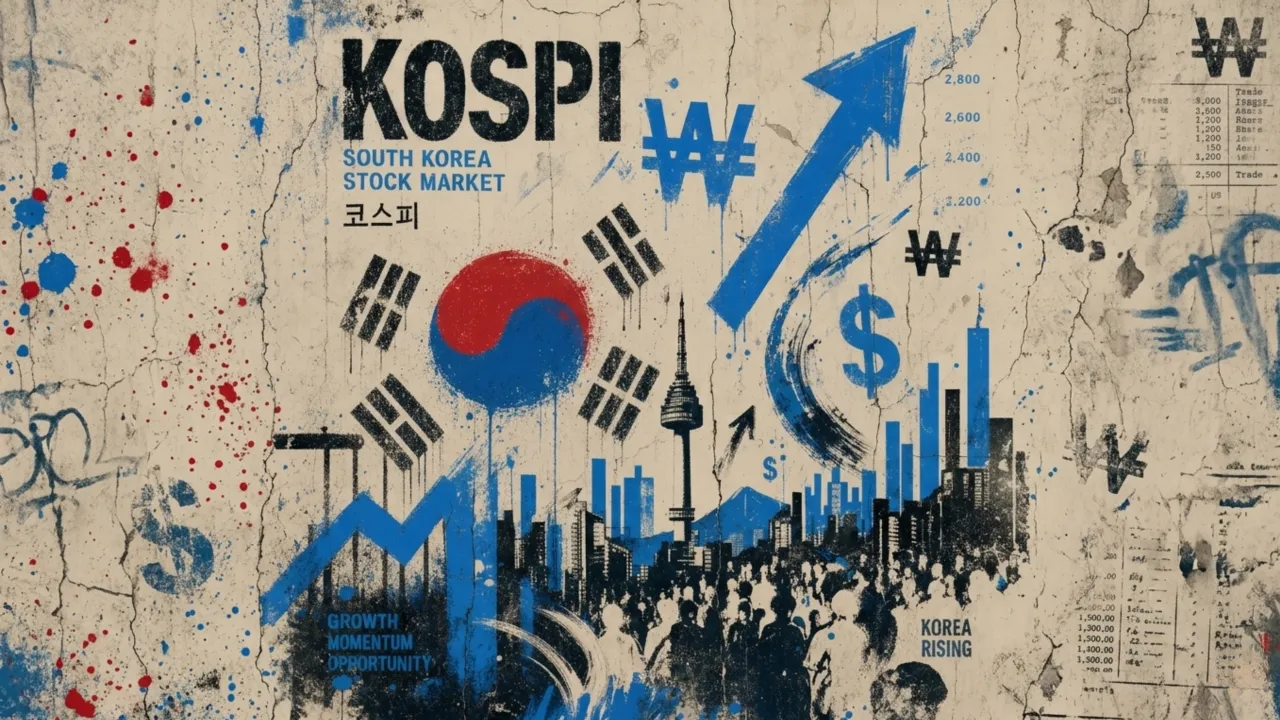
South Korea’s equity market has gone from overlooked to borderline overheated in record time. What used to be a relatively inaccessible, under-owned corner of global equities is now attracting a wave of attention, and the tone is shifting fast from opportunity to outright mania.
A big part of that change comes down to something relatively simple: access.
Interactive Brokers (IBKR), now a go-to platform for everyone from serious retail traders to billion-dollar hedge funds, has expanded into South Korean equities. This is more significant than it might seem.
When a platform with that kind of reach opens up a new market, money follows. In markets that are not especially deep, even a modest flow of capital can move prices quickly.
We’ve seen this playbook before. First comes access, then inflows, and finally momentum, with it a narrative that starts to justify the move after the fact.
What’s notable this time is that not all of the attention is going where one would expect. While global investors tend to fixate on South Korea’s semiconductor heavyweights, there’s a growing case being made for more traditional cyclical businesses. Many of these companies are still trading on mid-single-digit earnings multiples, which, on paper, look cheap enough to attract value-oriented capital.
That’s really the set-up: cheap stocks, new access, and fresh flows. You don’t need much more than that to get prices moving. However, personally, this is where I feel the situation is becoming uncomfortable.
On the ground, signs of speculative behaviour are becoming harder to ignore.
There are reports of retail investors cancelling life insurance policies early (taking the hit on penalties) just to free up cash to put into the market. That’s not disciplined investing. It reflects urgency, and urgency, more often than not, shows up closer to the end of a move than at the beginning.
Price action is telling a similar story. South Korea’s benchmark KOSPI index jumped 8.42% in a single session, closing at 7,816 on May 21, 2026. That kind of move would stand out in any market, yet it becomes even more striking in context- the KOSPI has surged more than 80% since the start of the year.
A +8% move in a major index in a single session isn’t healthy-it’s frothy. Moves like that don’t just reflect optimism; they fuel it. They attract more participants, reinforce the narrative, and create a sense that sitting on the sidelines is a mistake.
That’s how markets tip from “interesting” to “crowded.”
None of this means the opportunity is gone. Structural inflows can persist longer than expected, and markets in the middle of a re-rating phase rarely move in a straight line. There may still be upside, particularly in areas that haven’t fully caught the bid yet.
The character of the market is clearly changing. What started as a somewhat under-the-radar opportunity is now firmly on the radar- and arguably getting a little too comfortable there.
At this point, it’s no longer about whether South Korea is cheap. It’s about how quickly the flood of money, access, and attention is shrinking that opportunity before investors fully realise it.
Once a market moves from being ignored to being chased, the easy part of the trade is usually already behind you.
First published on LinkedIn, 26 May 2026.